Categories
Power of Perspective

There is just too much theory, processes and format!

This month we will focus on defining and understanding what is right for our own businesses, as what is best practice for one entity might not be the best practice for another.

What does the term best practice mean?  From Wikipedia: “best practice is a method or technique that has consistently shown results superior to those achieved with other means, and that is used as a benchmark” (Contributors, 2015).  There are many ‘best practice’ approaches and formats to help improve standardization, governance and company bottom-line performance.  Unfortunately, less importance is placed on the integrative approach to blending this methodology with logic and relevance to one’s own entity.

Removing the cookie cutter approach:

Some best practice examples are:

Best practice for our own business needs to adhere to two fundamental principles – statutory requirements and ethical considerations. 

Statutory requirements –  Law is law and the formats and processes which provide the framework for adherence to statutory parameters are also the initial governance (management) frameworks providing the backbone to our company  structures.

Ethical considerations – In today’s connected world, we also need an integrated look at our business’s impact on our environments and stakeholders as this affects our own best practice.   Secondly, South African law provides a utilitarian approach to the business in which the directors, members or agents are legally bound to act in “the best interests of the company”.

The big variable is what are the best interests?

What benchmark does a best practice for one company have that can be the best practice of another? 

I don’t think there is a carbon-copy generic best practice that will serve different company’s best interests.  That said, best practices can provide templates on which to grow from.

To create your own best practice – research other best practices and invite perspectives and an integrated thinking approach.

Again, the more holistic and informed the approach, the more prepared you will be to choose and tailor make what is best practice for your business, your statutory requirements and your ethical considerations.

This way you can eliminate unnecessary and time-wasting formats and processes which enhances sustainability and gives you the confidence to continually evolve and improve your own practices over time, to best serve your company’s own best interests – both current and future.

So to have the right practice, create your company’s own best practice to best serve the company’s best interest.

Categories
Power of Perspective

What value is being created through your business?

Knowing what practice is the right practice for your business goes hand-in-glove with the value you want to create.  As your business grows, so does the value expectation.The term ‘blended’ or shared value has been around for a while yet it lacks active consideration in many SME’s.

What is shared value?

valueIt basically evolves around value based leadership – where value is not only determined by economic return but by blending shareholder value and consideration into other values like societal and environmental. It incorporates investing in and maximising value generation of a wider net of value creation models and promoting a leadership style of inclusiveness through multi-perspectives and being authentic and open to change.
Why do it?

It’s not just about giving back or sharing economic returns, it is a long-term approach to integrated and design thinking.  It is a conscious and strategic plan in determining your impact on the environments in which you work that will work together with your sustainability and growth plan.

As said last week, for determining your own best practices, you need to have ethical considerations of your business impact on all your environments and stakeholders.  This would be a pro-active first step in working towards creating shared value.

Categories
Power of Perspective

Strategy – Is it a buzz word?

Strategy as a practice

The word strategy normally puts fear into most managers as we seem to think it is delving into the unknown.  Strategy is the future and at first, the future is uncertain. So what is the meaning of strategy?

Changing the way we think about the future

Max McKeown, author of The Strategy Book argues, “Strategy is about shaping the future” to achieve “desirable ends with available means”.

Strategy relates to a plan of action for the aim of achieving a desired goal that has long term long-term relevance, resilience, viability and sustainability. (Ryan, 2014)

Types of  business strategy include….

For one, being strategic is changing the way we think about and act on the future.

If, as managers we are taking holistic views of the problems we are facing and utilising multi-perspectives in our research and solution sourcing, we are thinking about the future and how to achieve our goals.

This allows for a more streamlined and informed approach: Once the goals are defined, the resources are identified and organised according to the execution of the action plan.

Quite simply, the action plan is: 

  1. The first level of management (operations) manage the present
  2. The second level of management manage the future that the…
  3. ..Top level of management have shaped

To have strategy as a practice we must continually challenge where we are as a company versus where we are going and how we are going to get there. The strategic process is achieving goals “under conditions of uncertainty”.

It is through visualising and planning a desired future that exceeds the resources available that strategic thinking is truly born.

Categories
Power of Perspective

Are you having strategic conversations with your management team?

Strategic conversations provide a framework of direction for your company through the creation of actionable steps that lead to a desired outcome. 

How to have strategic conversations?

Communication and a circular management approach is key to having strategic conversations with your management team.  These stakeholder’s perspectives create the process of strategic conversations through the wider variety of ideas and possibilities which in turn create deeper thinking around key questions that need to be asked around the business:

  • Why are we in the business we are in?
  • Where are we as a business now?
  • Where do we want our business to be in the future?
  • How are we achieving our goals currently?
  • How do we want to achieve our goals in the future?

This process promotes new awareness’s and learning for the stakeholders which allows for a more creative interaction with new decisions and solutions.

Strategic conversations are not only an important organisational tool, they also provide stakeholder personal growth.  Strategic conversations give your company direction through enhanced awareness and discussion and it promotes new learning for the participants of the process.

Categories
Power of Perspective

Building your competitive advantage

So what is competitive advantage in business?

The goal of a business strategy is to achieve a sustainable competitive advantage that allows an organization to outperform its competitors.

These attributes may include access to natural resources, location, skills, and new technologies and so on.

Advantages should lead to higher margins than those of your competitors.

A business’s sustainable competitive advantage is achieved by continuously developing existing and creating new resources and capabilities in response to rapidly changing market conditions. (Thanks to Tom Hickman for his above contribution on “Building your competitive advantage”).

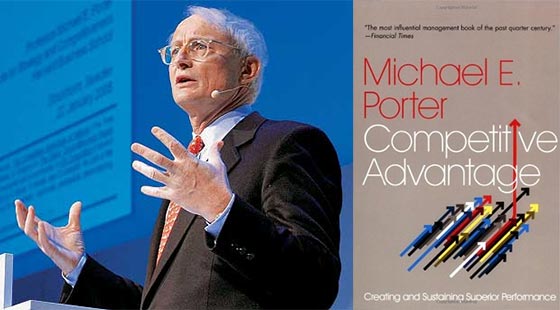
competitive advantageMichael Porter defined the two types of competitive advantage an organization can achieve relative to its rivals: lower cost and differentiation.

These types of advantages derive from attributes that allow an organization to outperform its competition, such as superior market position, skills, or resources.

In Porter’s view, strategic management should be concerned with building and sustaining competitive advantage. The question is how to gain a competitive advantage?

Types of Competitive advantages come in two forms:

  • Cost Advantages – are achieved when your business can produce the same products and services at a lower cost.
  • Differentiation Advantages – are achieved when your business’s products and services are superior to your competitors’

The ultimate goal is to build a strategy to give sustainable competitive advantage. The human factor (new ideas from a skills base) is important in developing a competitive advantage.

A combination of these 3 strategies with the 2 competitive advantages is the idea.

Porter suggests 4 broad strategies:

  • Cost leadership strategy – to offer products or services at the lowest cost in the industry.

Often this strategy is combined with standardization and economy of scale benefits. The risk here is upfront costs and earning a profit / cash flow for the company, rather than operating at a loss and draining profitability from all market players.

  • Differentiation strategy – is to provide a variety of products, services, or features to consumers that competitors are not yet offering or are unable to offer. 

This strategy gives a direct advantage to the company which is able to provide a unique product or service that none of its competitors are able to offer.

  • Innovation strategy – is to be ahead of other market players by the introduction of completely new or notably better products or services.

This strategy is typical for technology start-up companies which often intend to “disrupt” the existing marketplace, obsoleting the current market entries with a breakthrough product offering. This maybe in the form of product or process.

  • Operational effectiveness strategy – is to perform internal business activities better than competitors, making the company easier or more pleasurable to do business with than other market choices. 

Porters “Five Forces Model” below, provides a useful framework to analyse your competitive positions which aids the creation of strategic planning.

Figure 1 – Porters “Five Forces Model”

competitive advantage

Taken from http://www.mindtools.com /media/Diagrams/porters-five-forces-1-new.jpg

References and Resources

Michael E Porter, Competitive Advantage (1980) Free Press ISBN 0-684-84146-0.

Next week we will discuss developing strategic capability.